So you have bought yourself a bit of land. Maybe you have dropped a shipping container on it, parked a caravan, or thrown up a shed. Good on you — sounds like the dream.
But then someone mentions the word “council” and suddenly the dream gets a bit stressful.
Here is the thing: the rules around temporary structures are genuinely confusing. Even people who work in property every single day find council guidelines hard to follow. So we have written this in plain, everyday English to help you understand what the rules actually mean — and when you need to worry about them.
⚠️ Quick Heads Up First: Every council in Queensland can have slightly different rules. This is a general guide — not specific legal advice. Read this to get your head around how it works, then give us a call and we will help you sort out your specific situation.
First Things First – What Even Is a Temporary Structure? 🏗️
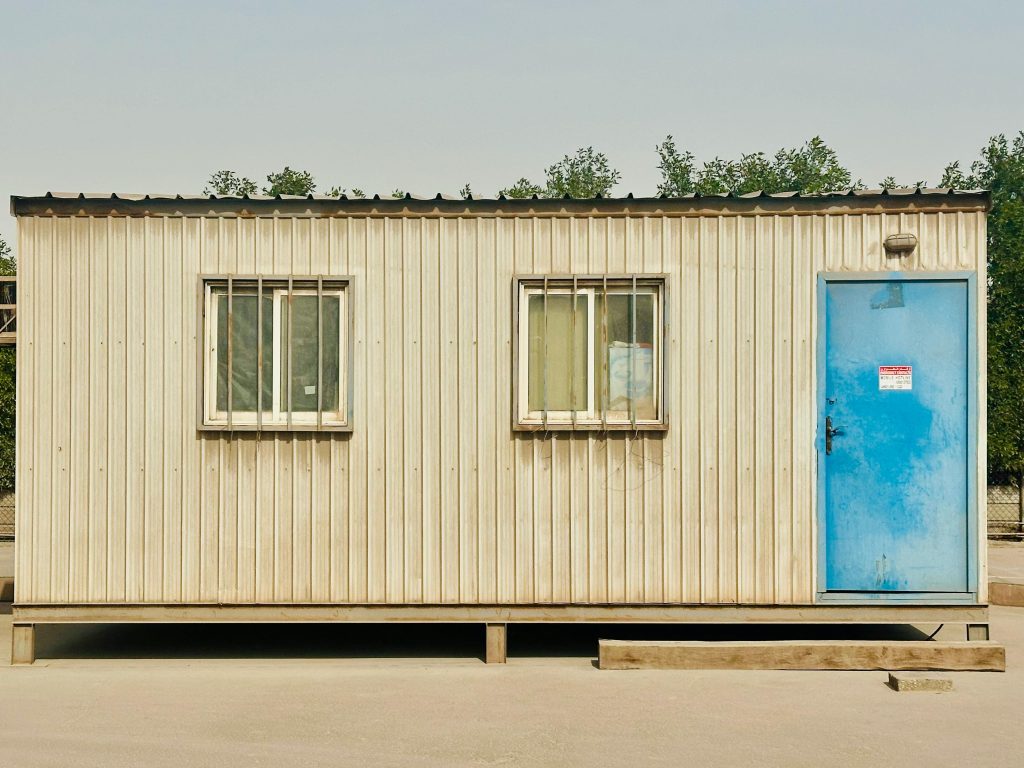
A temporary structure is something that is not meant to be there forever. It can be moved, it is not bolted or concreted into the ground, and it does not have permanent connections to services like sewage or mains water.
Sound familiar? Common examples include:
- 📦 Shipping containers used as living spaces (container homes)
- 🚐 Caravans or motorhomes used as accommodation
- 🏚️ Portable or prefabricated sheds
- 🏕️ Demountable buildings
- 🚽 Portable toilets or shower facilities
✅ The Simple Rule: If you can pick it up and drive it away without leaving a hole in the ground — it is probably temporary. If removing it would leave behind a concrete slab, pipes or wiring — it is probably permanent.
So What Makes Something Permanent? (This Is Where It Gets Tricky) 😬
Here is the part that catches most people off guard. Council does not just look at the structure itself, they look at what you have added to it or around it.
You might have a container home that started out as completely temporary. But the moment you add certain things, council can reclassify it as a permanent structure, even if the container itself could technically still be driven away on a truck.
Things That Can Make a Temporary Structure Permanent in Council’s Eyes:
⚠️ Adding a Septic System or Connecting to Sewage: This is one of the biggest ones. A septic tank requires digging into the ground, installing pipes and creating a waste system. Once you do this, council almost always considers the structure it serves to be permanent – because you have created infrastructure in the ground that is designed to stay there.
⚠️ Adding a Carport, Verandah or Deck: Attaching a carport, verandah or deck to a container home or shed changes how council views it. These additions suggest the structure is not going anywhere – and they often require their own building approval on top of everything else.
⚠️ Pouring a Concrete Slab: If you place your container or shed on a concrete slab, that slab becomes a permanent fixture of the land. Even if you removed the container tomorrow, the slab would still be there – and council sees the whole setup as permanent from day one.
⚠️ Connecting to Mains Water or Electricity: Running a permanent water pipe or electrical connection from the grid to your structure is another indicator that the structure is permanent. Temporary structures are expected to use tanks, generators or portable power.
⚠️ People Living in It Long-Term: If someone is living in the structure full time as their primary residence, council may consider it permanent regardless of how it was built. Queensland has specific rules about what qualifies as habitable accommodation.
Temporary vs Permanent – Side by Side 👀
| Temporary Structure | Permanent Structure | |
|---|---|---|
| Foundation | No slab or footings. Sits on ground, blocks or skids. | Fixed to the ground with concrete footings or a slab. |
| Can be moved? | Yes — can be relocated without major work. | No — removing it would damage the land or require demolition. |
| Connected to services? | No — uses water tanks, generator or porta-loo. | Yes — connected to mains water, sewage, electricity grid. |
| Council approval needed? | Usually not — but always check your local rules. | Almost always yes — a Development Application (DA) is required. |
| Examples | Container home (no slab), caravan, portable shed. | House, granny flat, garage on slab, structure with septic. |
What Happens If Council Decides Your Structure Is Permanent? 😬
If council reclassifies your temporary structure as permanent, a few things can happen — and none of them are fun.
You may need a Development Application (DA) A DA is the formal permission you need from council to build or change a permanent structure. If your structure is already built and council decides it needed a DA, you will likely need to submit one retrospectively. Translation: you are doing the paperwork after the fact, which is harder, slower and more expensive than doing it upfront.
You could receive a Show Cause Notice This is a formal letter from council saying they think you have breached planning laws and asking you to explain yourself. It sounds alarming — and it can be — but it is the start of a process, not the end of one. A property lawyer can help you respond properly.
You could be ordered to remove the structure In serious cases where no approval can be granted, council can order you to demolish or remove the structure entirely. Nobody wants this. Which is why checking before you build is always cheaper than fixing problems after.
You could face fines Unapproved permanent structures can attract significant fines running into thousands of dollars. The exact amount varies by council and the nature of the breach.
The Plain English Jargon Buster 📖
Here are the terms you will see on council websites, and what they actually mean:
| Legal Term | What It Actually Means |
|---|---|
| Development Application (DA) | The formal paperwork you submit to council to ask permission to build or change something on your property. |
| Operational Works Approval | Permission for work that changes the land itself — like installing a septic system, drainage or earthworks. |
| Material Change of Use | When you change what a piece of land or building is used for — like turning a shed into a home. |
| Complying Development | Certain types of building work that are pre-approved as long as they meet set standards — no DA needed. |
| Building Approval / Certifier | A private or council certifier checks your plans and approves the building work meets safety standards. |
| Habitable Room / Accommodation | A space designed for people to live or sleep in. Triggers different and stricter rules than a shed or storage space. |
| Retrospective Approval | Approval you apply for after the work is already done. More complicated and not always possible. |
| Show Cause Notice | A formal letter from council asking you to explain why you should not be penalised for a suspected breach. |
| Enforcement Notice | A formal order from council telling you to fix, modify or remove something that breaches planning rules. |
What Should You Do Before Adding Anything? ✅
The golden rule is simple: check before you build. Here is a quick checklist:
| What to Do | |
|---|---|
| 1 | Contact your local council and ask specifically whether what you are planning needs approval. Be specific — describe exactly what you are adding. |
| 2 | Check your property’s zoning. Rural residential, rural and residential zones all have different rules. |
| 3 | Adding a septic system? Always get council approval first. This is non-negotiable in most Queensland councils. |
| 4 | Adding a carport, deck or verandah? Treat it like adding it to a house and check if building approval is needed. |
| 5 | Someone going to live in it full time? Speak to a property lawyer before they move in. Habitable accommodation rules are strict. |
| 6 | Already built something and not sure if it is approved? Get advice before council contacts you — it is much easier to fix proactively. |
The FAQs People Are Too Embarrassed to Ask 🙋
Q: My container is on blocks, not a slab. Am I safe? Probably yes — for now. But the moment you start adding services or permanent attachments, the conversation with council changes. Keep it genuinely moveable and unconnected if you want it to stay temporary.
Q: My neighbour has a container home and council has never said anything. Does that mean I am fine? Not necessarily. Council may not have inspected your neighbour’s property yet. “Nobody has complained so far” is not the same as “it is approved.” Do not rely on this logic.
Q: Can I just not tell council? You can. But if council finds out — through an inspection, a neighbour complaint or a satellite image check (yes, they do this) — the consequences are much worse than if you had asked upfront. Not worth it.
Q: How do I know if my property is zoned correctly for what I want to do? Call your local council and ask. Or contact Milana Law and we can help you work it out.
Not Sure Where You Stand? Talk to Milana Law. 🤝
At Milana Law, we help Queensland and NSW property owners understand their rights and obligations in plain, simple language. Whether you are planning a container home, adding to an existing structure, or trying to sort out a situation with council — we are here to help.
No jargon. No judgment. No unnecessary complications.
✅ We explain your obligations in plain English before you build anything
✅ We help you understand what council approval you actually need
✅ We assist with retrospective approvals and council correspondence
✅ We service Queensland and NSW – metro and regional
Contact Milana Law today, let us sort it out before council does.